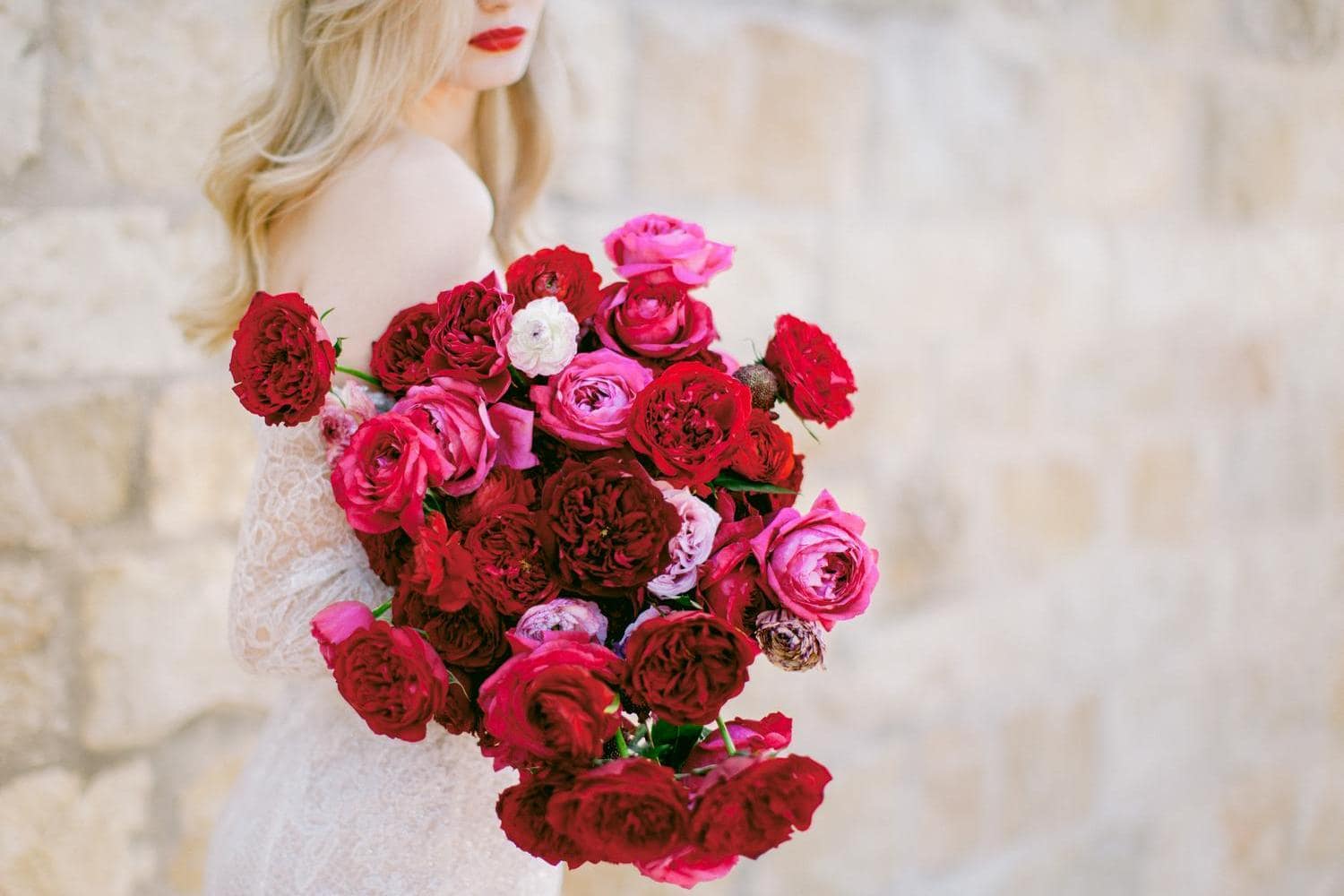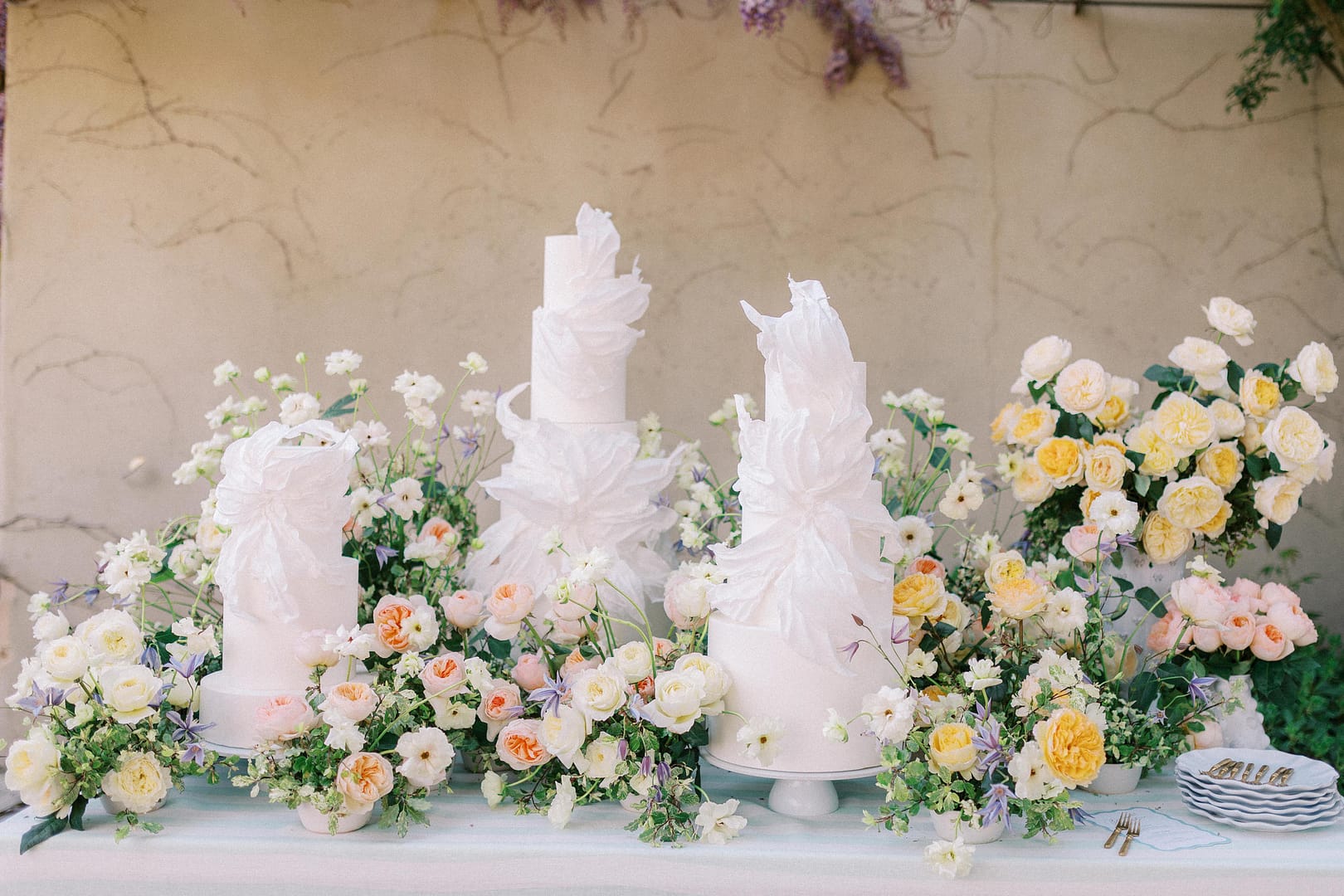
For 2027, some of the most compelling wedding flower palettes will not be the most complex, but those that take a single colour and explore it fully. In interiors, colour drenching has demonstrated just how immersive and confident one colour can feel. Now, that same approach is influencing weddings. Monochromatic wedding flowers move from the palest hue to richer, more saturated tones, creating a cohesive and beautifully considered look.
This approach is not about making every flower match, nor does it mean arrangements must be minimal. A ceremony can be abundant, a bouquet beautifully layered and a reception filled with flowers, while remaining devoted to one colour family. With their intricate forms, captivating fragrance and natural variation from bud to open bloom, David Austin Wedding Roses reveal just how much beauty one colour can hold.
What Are Monochromatic Wedding Flowers?
At its simplest, monochromatic floral design begins with one core colour. Rather than introducing contrasting hues, the palette explores the full spectrum of a chosen hue. An ivory palette might move through luminous white, cream, parchment and buttermilk, while pink could begin with the palest blush before deepening into rose and raspberry.
In monochromatic wedding flowers, these subtle differences are essential. They create dimension as light falls across arrangements, reveal the individual form of each flower and stop a single-colour design from feeling flat or repetitive. The palette remains cohesive yet natural and layered. Foliage and exposed stems can still have a place because the intention is not rigid colour matching, but a clear floral story led by one beautifully explored hue.
Monochromatic should not be confused with monofloral or single-variety design. A monochromatic arrangement may contain several different flowers united by colour. A monofloral design uses one type of flower, such as roses, while a single-variety bouquet is composed of one particular rose. A bouquet of Leonora alone would be all three: monochromatic in ivory, monofloral because it contains only roses and single-variety because every stem is Leonora. Here, the changing tones, textures and stages of a single variety provide the detail.


Why Monochromatic Flowers Feel So Luxurious
Choosing one colour requires confidence. With no competing colours to distract the eye, the quality of the flowers, the composition and every subtle variation within the palette become more apparent. Repetition gives even the simplest arrangement a strong visual identity, while using an exceptional flower in abundance creates a sense of generosity and intent.
This does not mean monochromatic wedding flowers must be minimal. A bridal bouquet can be wonderfully full, an aisle can appear to grow with flowers and a ceremony installation can transform its surroundings, all while remaining devoted to one colour family. The restraint lies in the palette, not in the scale.
In a monochromatic palette, the layered textures and intricate forms of David Austin Wedding Roses take centre stage. The differences between cupped blooms, open rosettes and unfurling buds ensure that repetition never feels uniform. Their colours are never entirely static. They shift across the petals, deepen towards the centre and continue to evolve as each bloom opens. When colour is deliberately restricted, these subtle differences become part of the design. Whether arranged as an intimate bouquet or gathered in abundance throughout an immersive floral setting, roses allow one beautifully chosen colour to make a powerful impression.
The Beauty is in the Detail
One colour can contain far more nuance than its name suggests. Within the David Austin Wedding Roses collection, even the most familiar colour families reveal remarkable complexity. Ivory is not a flat neutral and pink is not a single, uniform shade. Look closely, and each reveals its own spectrum.
Within an ivory and buttermilk palette, Leonora brings luminous ivory, while Patience opens to reveal a creamy centre touched with pale, buttery yellow. Purity introduces the softest whisper of apricot and peach, while Bessie moves through ivory, buttery cream and hints of caramel. Each rose remains part of the same gentle colour story, but brings something different to it.
Pink offers the same possibility with greater saturation. Ottilie’s soft cotton-candy tones could sit alongside the watercolour blush of Constance, the warm coral heart of Phoebe and Miranda’s richer cherry-pink centre. Together, they allow the palette to deepen gradually rather than jumping between unrelated colours.


How to Carry One Colour Through Your Wedding Flowers
A monochromatic floral story can begin with the bridal bouquet and unfold gradually throughout the day. A single-variety bouquet offers the purest interpretation, while a design combining several flowers in closely related tones can introduce more movement and texture. Bridesmaid bouquets and boutonnières can then echo the same colour at a different intensity rather than replicating the bridal bouquet exactly.
During the ceremony, flowers can become increasingly abundant as they approach the place where vows will be exchanged. Aisle arrangements might begin with the palest tones in the palette, gradually deepening towards a flower-filled arch or backdrop to create a subtle ombré effect. Changes in height and scale can strengthen this sense of progression while allowing each arrangement to retain its individuality.
At the reception, the colour can continue through centrepieces, floral runners, mantelpiece arrangements and installations suspended above dining tables. Linens, candles, stationery, and glassware can support the flowers without being perfectly matched. Natural linen, warm candlelight and pale stone might accompany ivory roses, while pink flowers could be complemented by blush textiles or deeper rose-coloured details. The aim is harmony rather than uniformity. As the flowers move through the day, subtle shifts in tone and scale keep each setting connected without making it feel the same.
One Colour, Made Entirely Your Own
Choosing one colour does not limit what your wedding flowers can become. It invites closer appreciation of every intricate petal and beautifully individual bloom. Whether softly nuanced or deeply saturated, a monochromatic palette offers endless possibilities for creating a floral story that feels entirely your own.